
Set up in Munsterland, Germany, by two brothers, Stefan and Sebastian Hamann, Shopware, as the largest and the most popular e-commerce platform, has been operating successfully in the German market for about 20 years. Throughout these years this platform has always been updated by adding numerous out-of-the-box features and SEO capabilities, releasing new versions in order to meet the constantly changing customer requirements. In 2019 on Shopware Community Day, the latest version of Shopware 6 was introduced, which has been attracting new clients through its scalability, flexibility, and internationalization every day. Aiming at providing the best experience for a customer anywhere in the world and developing online trade worldwide thanks to a great number of sales channels (different in assortment, currencies, and languages), tax calculation/pricing configurators built for scaling internationally make Shopware a unique e-commerce platform today.
Besides, the company itself has been expanding the market geographically. Since 2016 Shopware software providers have been in a close collaboration with the UK market which resulted in strengthening the UK business with the opening of a Shopware office in London last year. It is also worth noting, that liaising with Shopware guarantees security and reliability, as it has a very active developer community that provides customers with professional support.
Apart from spreading globally, Shopware gives a unique language possibility to its customers to sell in every corner of the world. Currently, Shopware applications are available in around 25 languages thanks to Crowdin. This is an open-source platform where a community of volunteers, native speakers invest their technical language knowledge in frontend translations so that the online shops will be able to function internationally. Once the translations are complete, any online store can download the plugin for free according to the language needs of their customers. Note: all instructions are translated from the English or German languages despite the fact that Shopware was made in Germany. Even more, to prove the point of being an International platform, Shopware documentation is currently prepared in English first.
On the contrary, after having made a thorough research of the English-speaking markets regarding the most popular platforms in e-commerce particularly in the USA, it was surprising to find out that the majority of the websites have been still utilizing WooCommerce, Magento, Shopify for many years without considering switching for more advanced, modern platforms due to many reasons.
According to Google Trends during the last 12 months, Shopify was the most popular e-commerce platform in the USA.
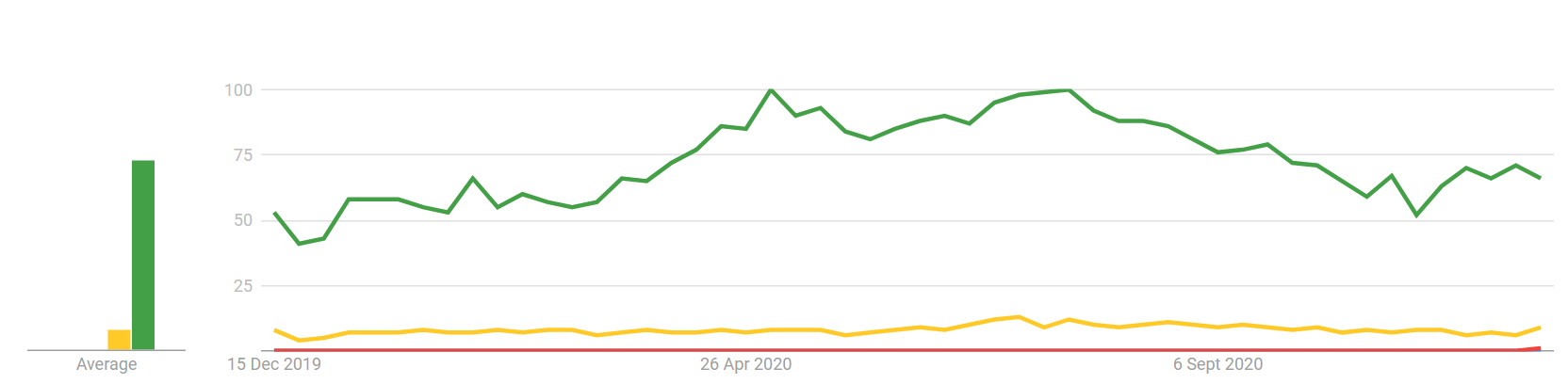
 - Shopify;
 - Magento;
  - Shopware
Whereas in Germany the line graph below shows that the leading e-commerce platform is Shopware.

- Shopware; - Magento
Talking about the English-speaking markets, the USA has always been considered the global standard for e-commerce, as the first platforms for online sales like Amazon and eBay were created here in the 90ies. Moreover, the domination of the US on digital business can be explained through a great number of 288 million internet users, and a steady habit of relying upon online shopping. Being the largest market for eCommerce comparing with the United Kingdom & Germany (see the pie chart below), the USA with a revenue of US$343 billion in 2019 is appeared to be the second-largest market in the world after China (https://www.statista.com/topics/2443/us-ecommerce/). The question regarding the reasons for the Shopware platform having not been introduced to the American e-commerce market yet remains open. Maybe due to the big players and fierce competition, the barriers to overcome are quite strong to enter the American market. Nevertheless, Shopware as the most elegant e-commerce platform with its proactively developing strategies has a lot of chances to make itself heard of in any part of the world. These are only our presumptions, if you have any other ideas, you are more than welcome to share them with us.
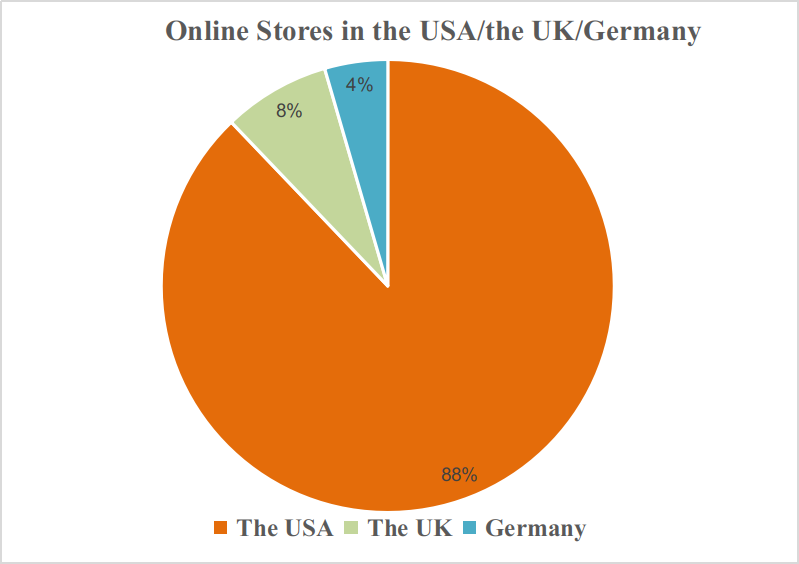
https://trends.builtwith.com/shop
In general, the e-commerce business is rapidly changing and expanding every day. Only in 2020 more than 24 million e-commerce websites have been launched (see the statistics ) worldwide, thus affecting online customer behavior and setting the shape for the new online international shopping habits. Therefore, rather than selling through online marketplaces, many business owners are moving to build their own sites with e-commerce functionality. Secondly, there is an abundance of e-commerce platforms to choose from nowadays which sometimes confuses and misleads entrepreneurs. Plenty of useful tips & articles can be found on any website how to start your business from the scratch or how to optimize your site in order to increase the conversion rate and “force” your customer to purchase at your online shop through different marketing strategies. Does it sound good to you? In these times of uncertainty and fierce competition between e-commerce players, we have prepared a thorough but brief comparison of three e-commerce platforms like Shopify, Magento, & Shopware which for sure will simplify your situation to make a decision. Now let’s have a look at what Shopware/Shopify/Magento has to offer.
| SHOPWARE | |
| Price | Free of charge: there are no costs until you generate the sales. |
|
Pros
|
Advantages:
- open-source software;
-an easy set-up and administration of the online shop;
- the key feature of Shopware is Shopping World. It helps the online companies build the highest level of engagement with customers through banners, video slider, blog articles;
-better optimized for SEO with a focus on emotional content marketing;
-a simple backend;
- short-time loading system. In a few week’s time you can have your business running;
-Shopware 5 integration is designed to work with Elasticsearch for the companies containing millions of items, as it improves functionality and speed. Note: smaller shops do not require the installation of Elasticsearch.
-the integration of different payment methods and the shipping options;
- a variety of sales channel;
- good support & community;
- a smooth global scaling.
|
| Cons |
Downsides:
-additional cost for media customizations;
- comparatively a small number of plugins (around 3,500 of free and paid modules).
|
| Most suitable | For every business model, whether B2B or B2C; Shopware Cloud has been recently introduced for D2C (direct-to-consumer); for beginners wishing to start their business from scratch, or those who want to boost their e-commerce productivity. |
| SHOPIFY | |
| Price | A 14-day free trial is available. |
| Pros |
Advantages:
-a self-hosted eCommerce platform;
-an easy backend for both beginners and advanced users;
-extensive Facebook selling features.
|
| Cons |
Downsides:
-weak SEO;
-transaction fees (using non-Shopify payments)
-costly apps
- no responsive frontend
- no customer support in the UK.
|
| Most suitable | For small-to-medium size businesses |
| MAGENTO | |
| Price | There is no trial period for Magento (Magento Commerce Edition starts at $24,000 a year and up. However, the Open Source (free) version of Magento is free, but it requires a substantial amount of development). |
| Pros |
Advantages:
- open-source software;
-a good selection of free and paid plugins;
-improved security system through Two-Factor Authentication (2FA). However, it applies to Magento Admin users only.
-powerful SEO features;
-frontend is responsive;
-global selling;
-Integrated checkout, payment, and shipping.
|
| Cons |
Downsides:
-costly with Commerce Edition, requires Experienced Developers;
-poor product support;
- a complex collection of e-commerce software, which requires hosting;
- a slow-time loading system.
- The main drawback of Magento 2.4.1 is a complete drop-off, to the support of Elasticsearch which is a must-have requirement to run a store.
-No social media features included.
|
| Most suitable |
Enterprise-level E-Commerce (Magento Commerce and/or Magento Cloud).
Please note: Magento Open-Source does not include B2B features.
|
Having compared both sides of each platform briefly, we can see that Shopify is better suited for retailing business due to its functionality and Shopware with Magento are more advanced systems which belong to the same league, as they work well for the global market, B2B and B2C businesses. Which of them is better: Shopware or Magento? Our answer will be simple: the more advanced functionality of your system is, the more difficult it is for implementation and maintenance. In terms of usability & budget, Shopware 6 wins Magento 2. Shopware 6 is a cost-effective and easy-to-run- online shop solution with an intuitive interface and user-friendly backend. Unlimited flexibility thanks to the API approach, the possibility to develop the authenticity of your brand with Shopping World, and numerous out-of-the-box features and ready-to-use plugins might make you think of moving your commerce business to Shopware. Should you require more specific information on Shopware with a free demo presentation, please feel free to contact us.
Nevertheless, regardless of the competition between these two platforms both of them have won the trust of the renowned companies like Coca-Cola (Magento), Swatch (Magento), Christian Louboutin (Magento), L'Oréal (Shopware), Mercedes-Benz (Shopware), Philips (Shopware) worldwide and continue to conquer the world’s market by accepting any technological challenges and easily adapting themselves to the new changes. Shopware is a one click solution for start-up or maintenance. Magento is a time-consuming solution comparing with Shopware, as it is a more complex system loaded with numerous features, extensions, and plugins. Consequently, it will take a good while and cost you a pretty penny to select the best combination of features and extensions for developing or designing your online store. The choice is YOURS.
Are you interested in a dedicated team?
Please contact our team, we will be glad to help you.


